
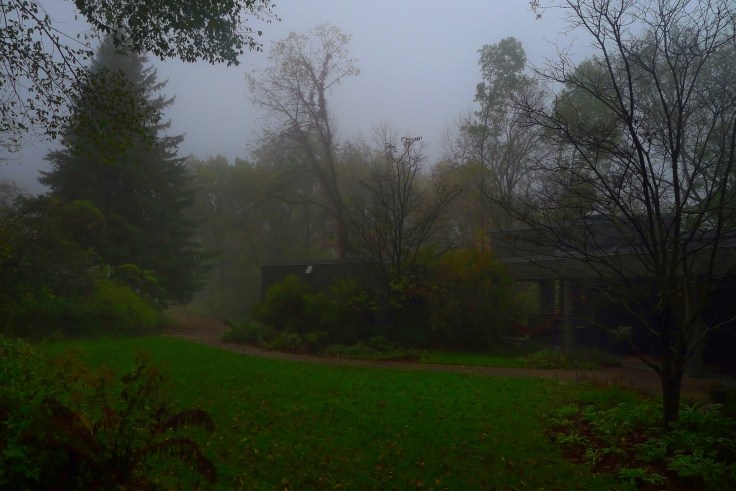
When I think of literature, I imagine a mansion with a hundred rooms. As for fairy tales, it’s a secret garden inside that mansion. With its roses, yellow lilies, vines, and clusters of willow trees, knowledge pools, fountains of love, and quiet ponds…
In that deserted village by the lake where grass floats on the water, my grandmother used to take my hand and lead me to see the winged horse living in the depths of the lake. She would point out the stone steps that disappeared into the cold green water and tell me how the horse emerged from there, its hooves striking the stones as it rose. From those times on, I believed that fairy tales were made up of magical words. I believed that the words were distilled from the earth, wind, and water of this world, and that they existed somewhere for anyone who wanted to see them with their eyes or hear them with their ears. One of the unique features of fairy tales is the way they move back and forth between their own world and the world of the listener. You can enter and exit without any explanation. Just like the grassy lake with stone steps that lead down to it, located beyond the mountains in that village. Fairy tales and reality are always intertwined somewhere. Telling a fairy tale is like having a conversation with the world. It’s about uncovering its secrets, sharing its sadness, listening to its fears, adding joy to its happiness, kissing it, and smelling it. Fairy tales are as beautiful as a child or a wild animal, pure and innocent. Although they don’t need protection, they wait for our attention. In my eyes, fairy tales are like wandering in a secret garden where the sources of water flow underground, just like literature is like constructing a architectural masterpiece.
On the hundredth anniversary of Andersen’s birth, I am eager to enter this secret garden again, to sit and smell the flowers of that exotic world inside a silk tent on a moonlit night, to listen to Antonin Dvorak’s opera Rusalka, and to descend the stone steps on the shore of the grassy lake. I have taken the books of Andersen, La Fontaine, Grimm Brothers, and others back into my hands and retreated into my own secret garden.
Fountains of love, quiet ponds…
Fairy tales are not infinite worlds. They don’t require breaking the chains of imagination. They have boundaries, walls covered in vines, and garden gates made of wrought iron. Roses are red, princesses are beautiful, and forests are dark. That’s all. In my opinion, fairy tales are a garden where we spend time and that contains both order and chaos. The fairy tale garden is made to be visited at night, and nothing else. The sentences that seem almost meaningless in daylight can send shivers down one’s spine at night. A place where fairy girls dance with mysterious rings, rose fragrances spread, and nightingales sing beneath a high tree so they don’t fly away, the moonlight shines on marble statues and more.Some fairy tales – which are the purest fairy tales – are like the waters in the garden. Dripping, flowing, cascading, gushing, or still, calm waters. They take their roots from the depths of the underground. Diving into the water means passing into the subconscious, that liquid world, to a world where the hero will become a genie, a fairy, or something else, a dark, unknown, nocturnal area. Strange things are hidden there. Andersen would at best be a love fountain in the fairy tale garden. Because Andersen’s fairy tales are woven with great human love. There must be the purest, cleanest love on earth. So much so that when reading Andersen’s fairy tales, you can feel the author gently stroking the world with his fingertips. Hans Christian Andersen was born on April 2, 1805 in Odense, Denmark. His father, who loved reading books, was a shoemaker and saw visions of a young girl coming to take him away before he died, on their house’s frosted windows. His mother remarried and died in her fifties due to alcohol. Despite making a bad start in his family life, Andersen was very talented and published 168 fairy tales including The Little Mermaid, The Little Match Girl, The Red Shoes, and The Ugly Duckling. He befriended famous musicians, philosophers, and writers of the time. He lived in Dickens’ house for a while and was probably an inspiration for creating the swampy terrain in Great Expectations. Alongside a great love for humanity, his fairy tales had a very dark side. Although The Snow Queen, who froze little Kay with her kisses, was one of the darkest fairy tale characters, little Gerda, who set out on a long journey towards the palace of the Snow Queen, was one of the bravest fairy tale heroes.
I think there must be a haunted pond in the darkest corner of the fairy tale garden. It is a body of water filled with shadows where only night-blooming water lilies float and willow branches lean into the water. I reserve this for the Grimm Brothers’ fairy tales. When I listen to their fairy tales, I imagine falling into that dark pond. I have to hold my breath to be able to come up in one piece. While the ghosts in the pond touch our hands, the fairy tales speak to us from the deepest part of our subconscious, telling us about our darkest fears and worries. They speak as if talking to someone hiding inside us. So much so that when the Grimm fairy tales were first published, they were revised because they were too bloody for children. In the first version of the fairy tales, Rapunzel gets pregnant and Cinderella’s stepmother cuts off her own daughter’s feet so they can fit into the glass slipper. The fairy tales are not the Grimm Brothers’ own work. When the interest in fairy tales began to rise in the 1800s, the period of the rising Romanticism movement, these two German brothers, Jacob and Wilhelm Grimm, began to collect old folkloric fairy tales passed down from generation to generation in Germany and Scandinavia…
“Genie in the Lamp”
Fairy tales, however, were much older and spread to all corners of the world. In the Chinese version of Little Red Riding Hood, the wolf became a tiger. In Iran, the hero was a boy instead of a girl. The tales were told in different forms in Burma, Japan, and Nigeria. Similarly, Cinderella was first told in China. The oldest known fairy tales are Aesop’s fables from the 6th century BC, but the French writer Charles Perrault, who turned the fairy tale genre into a literary movement, is credited with popularizing it. Although fairy tales like Little Red Riding Hood and Cinderella were later rewritten by the Brothers Grimm, their works are still adapted to opera and ballet under Perrault’s name. The Russian folklorist and writer Alexander Afanasyev also inspired Stravinsky’s ballet Firebird and took on the role of the Grimm Brothers’ counterpart in Russia.
In a corner of the garden lies a pool surrounded by rose bushes, reflecting the stars. Silk carpets are spread around, lanterns are lit. It is a place filled with the lights of dawn in the night garden; the realm of One Thousand and One Nights. The moonlight shines on women, the spiral tower in Samara, a girl named Dünyazat, caravans of camels, countries where the sun sets, Sinbad, and the genie in the lamp… It is a pool of wisdom filled with Greek, Egyptian, Mesopotamian, and Indian influences and teachings of the East. Its teaching is that the genie in the lamp is actually ourselves, and that if we want to unleash the genie, we must be virtuous… Just as the dark forest full of monsters represents our untamed side. If we want to be creative, we must enter the dark forest. We must become wild. We must be born again as a part of nature. It may be dangerous and mysterious, but it is our greatest power.
Il Paradiso Perduto
The water sources inside the fairy tale garden nourish the roses, yellow lilies, vines, and weeping willows, and make us dream of the lost paradise. Although fantasy novels are prevalent today, some of them heavily feature fairy tale elements. They are the last sounds rising from heaven. Who knows, maybe books like Alice in Wonderland, Peter Pan, the Chronicles of Narnia, Pinocchio, Gulliver’s Travels, and Harry Potter are all fairy tales? Neil Gaiman and Holly Black continue to write fairy tales with folkloric elements like werewolves and warrior queens.
Fairy tales continue to be written, read, and listened to. They will probably continue as long as humanity exists. After all, we all need to chat with the world from time to time. This can only be done by wandering in our secret garden. It is up to us to enrich this garden by listening to as many fairy tales as possible and telling new ones. You will understand better what I mean when you see a little child listening with interest to a fairy tale you made up one day.
 Delal Arya
Leave a comment